Saturday, 28 May 2011

Opening the HP-12C Platinum (original silver faceplate)

A while ago I got a HP-12C platinum (aka HP-12CP) off eBay. It had a depressed decimal point key. Today I decided to investigate, so opened it was. To open, first remove the battery and the rubber feet and then undo the 5 screws. With a plastic pry tool, lift off the back. the PCB is now visible. To go further, the tops of the heat stakes have to be removed. I cut them off carefully using the blade of a Stanley knife (Note - these will have to be replaced by screws. As the plastic stakes are hollow they take small screws quite easily but these may be difficult to find. I salvaged some from a 50G that fell into dis-repair due to screen problems. Look out for my next blog). Carefully taking the PCB off (to which the screen is attached) reveals a rubber mat under which is the keyboard.

Back removed showing PCB with heat stakes cut off and showing some of the replacement screws


All keys apart from the two shift keys are hinged plastic type. I have seen this (dis)proven technology before, in a cheap '70s four-banger (see the picture of the Satek 8M - suffering the same problem). This is not what I would expect in a top-of-the-range calculator that this is supposed to be! The shift keys are on separate rotating hinges - much better, but what do HP think? that the shift keys are used most often? is a calculator not used for numbers? wouldn't it seem  reasonable that the number keys would need to have the better design?

The loose 12CP key


Cheap '70s Satek 8M with broken hinged key


In this case the decimal key has become totally detached from its hinges and the 9-key has one leg detached and the 5-key is showing signs of weakness at the hinges - as I would expect the number keys are first to go as they are likely used more often.


To get the key more-or-less back to normal, it needs a spring to keep it lifted up and a "hinge" to rotate on. The hinge was fashioned from aluminium tape and a sponge added as I did not have a spring of the right size handy. (Other keys were taped as well in the hope that it will prevent breaking, note the white piece of sponge under the decimal key in the last picture).


The repaired unit put back together:

The decimal key feels a bit squidgy, so I guess an actual spring would be the better solution.
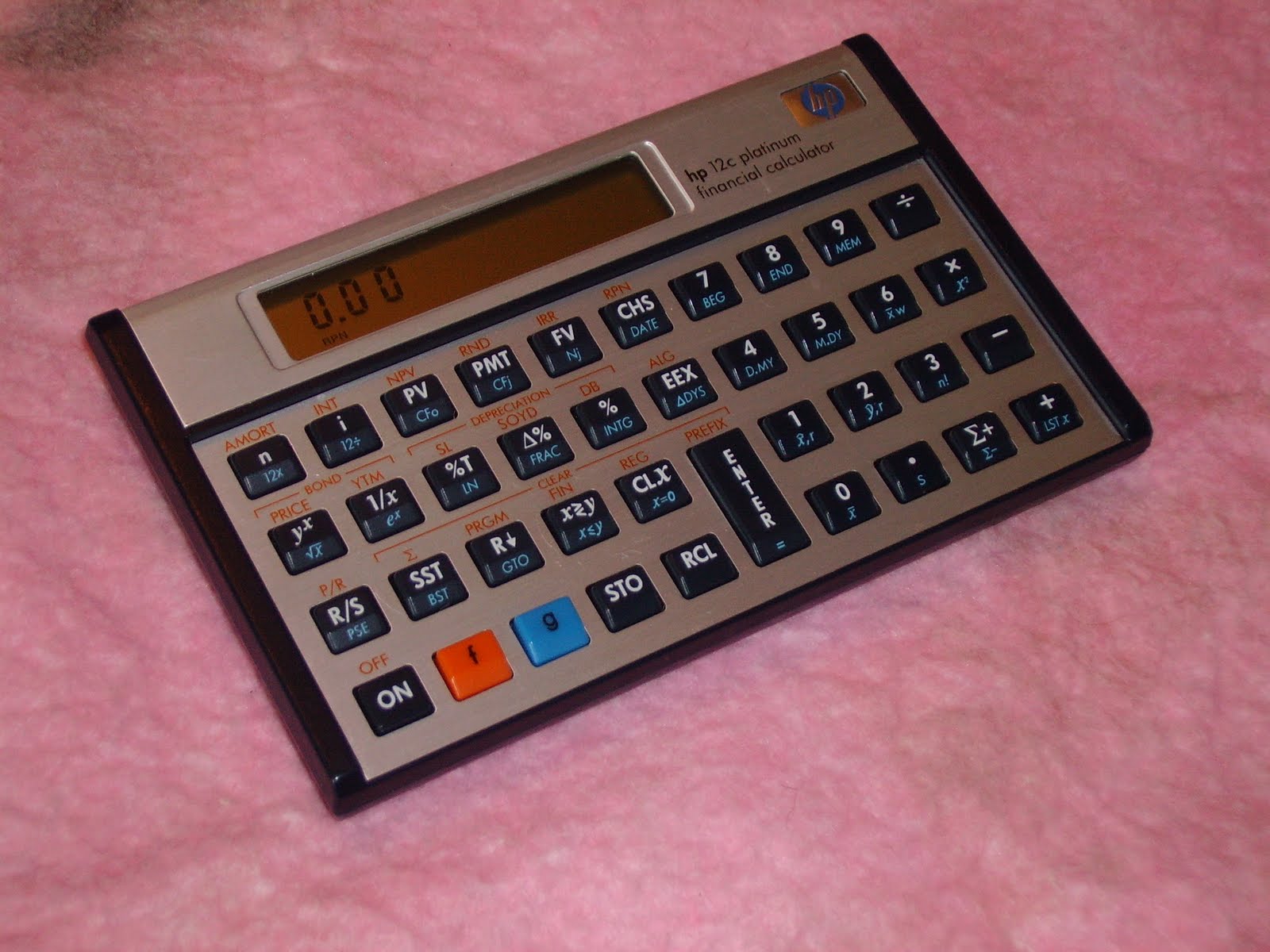


PLEASE NOTE: the newer black faceplate model apparently has a better keyboard (it certainly feels better).

Monday, 20 December 2010

teach them to fish ...

I firmly believe in "give someone a fish and you feed them for a day, teach them to fish and you feed them for life". However, teaching takes time and effort, something I am willing to do. Unfortunately not everyone wants to learn: "just gimme the fish!". This is also true for some students (note I am NOT generalising here, there are many hardworking students out there). I recently came across one such case on a calculator forum. He (or she) wanted help with solving a differential equation on the calculator. I (and others) recognised the equation as coming from electrical/electronics field. However, it was evident from the original post that he had put it incorrectly into the calculator. After giving a few directions and hints to get him thinking, the response was "just tell me how to put it in the calculator". He has not come back on that particular subject. Later that same person posted a link about calculator software that showed solutions step-by-step. Unfortunately this was for another calculator, and he proceeded to badger forum members to write such software for him.

I've given up on trying to help that person. If there was indication of wanting to learn, I would gladly help - but there doesn't seem to be. You can lead a horse to water...

Tuesday, 7 December 2010

FMEA/FMECA on electronic circuits - can anyone do them well?

In this case, it stands for "Failure Mode and Effects Analysis" or "Failure Mode, Effects and Criticality Analysis". I work with critical electronic equipment, and to ensure that it works as it should, one of the tools is an FMEA. They can be very useful, once completed correctly, for use in data for Basic Events in Fault Trees, Maintenace Task Analysis, failure detection and isolation, logistic support analysis, unscheduled removal and availability analysis, and more.

BUT, only if it is done well. One of the biggest problems is the proliferation of effect descriptions. There must be UNIQUE and WELL described effects. So often I find the same effect described in various ways. I am currently working on one that was contracted out to a "professional" company specialising in electronics FMEAs. Well, they have (a) badly described effects. I continually have to look at the failed element in the circuit to see what they meant with the effect. (b) Describe the same effect differently. There are almost 4000 low level effects - I reckon it should have been below 1000. There are over 400 high level effects - I am working on reducing it to below 100. Some of these high level effects differ only by one synonymous word (e.g. "element number noted in A" and "element number listed in A"). This makes it so difficult to filter on specific effects - which is what an FMEA is all about!!!.

Is there anyone that thinks the way I do??? Perhaps I should start doing them for a living (in my current job I don't have the time).

my blog name

Why PickyB? Well, one of my bosses told me the other day "you're the pickiest bastard I know", which I guess is a reasonable description of my attitude towards things. They have to be right, why else bother doing them.